Share this article:
Standard mobile navigation menus create browsing friction by allowing shoppers to explore only through text links before even seeing a single product. For this medical supplies brand, the data revealed that only 30% ever clicked through the navigation menu to reach a Product Detail Page (PDP) - meaning the menu created an extra decision step rather than a path to purchase. This experiment tested whether embedding shoppable products directly inside the menu could turn that tap into a direct shortcut to product discovery and sales.
Hypothesis: If the nav drawer carries shoppable best-sellers, shoppers who open the menu get a one-tap path from intent straight to a product page instead of another list of links.
What we A/B tested:
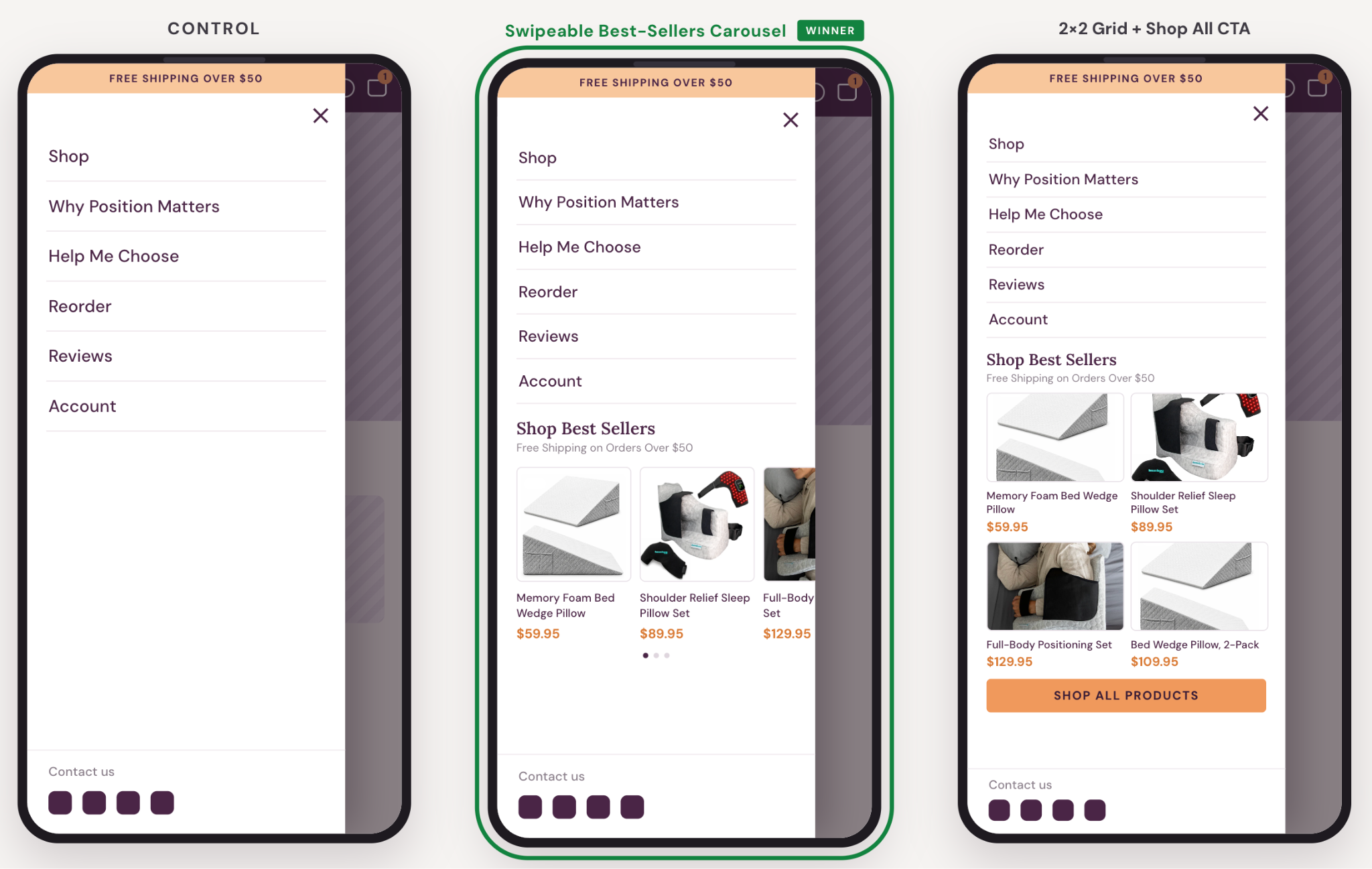
The winning variation: The “swipeable best-sellers carousel” was the clear winner. While both versions used a carousel, the other layout didn't get users straight to product pages. Instead, it sent more people to click the "Shop All Products" button, which added an extra, unnecessary step to the shopping journey.
The impact:
- +9.9% reached cart
- +10.0% purchase conversion
- +13.6% revenue per visitor
Takeaways:
- Visuals can have a better impact than text. Product photos, prices, and visual cards inside the menu spark instant interest where plain text lists fail. Seeing a high-converting product image turns standard navigation into an immediate visual discovery tool, getting shoppers onto product pages much faster.
- Redundant buttons can add extra steps instead of helping. Adding a generic button like "Shop All" inside an in-menu card can actually create friction because it forces users to load a broad category page first. If a shopper sees a specific product they like, let them tap straight to it and don't throw an intermediate button in their way.
- Shortening the path from menu open to product page cut out unnecessary taps. It boosted conversion by +10%. When you give users a clear visual target and a one-tap path, they take action faster and abandon the journey far less often.